The Venus of Sarab: A Little Clay Lady 8,000 Years Old
Long before cities, kings, or writing, someone in a little village in the Zagros mountains rolled clay between their hands and made a statue. We still have it.
Hey kids! Have you ever squished clay between your fingers and made a little animal, or a little person? Then you already know something very important: children and grown-ups have been doing exactly that for thousands and thousands of years.
Here is the proof. In the green hills near Kermanshah, in western Iran, there is a low mound of earth called Tepe Sarab. "Tepe" means hill — but this hill isn't a normal hill. It is a village that got buried, little by little, a very long time ago. About eight thousand years ago!
That is so long ago that there were no cities yet. No kings. No pyramids. Nobody had invented writing. People were just learning how to plant seeds on purpose and keep sheep and goats close to home instead of hunting everything they ate.
And in that village, someone sat down with a lump of clay and made a statue.
Meet the Venus of Sarab
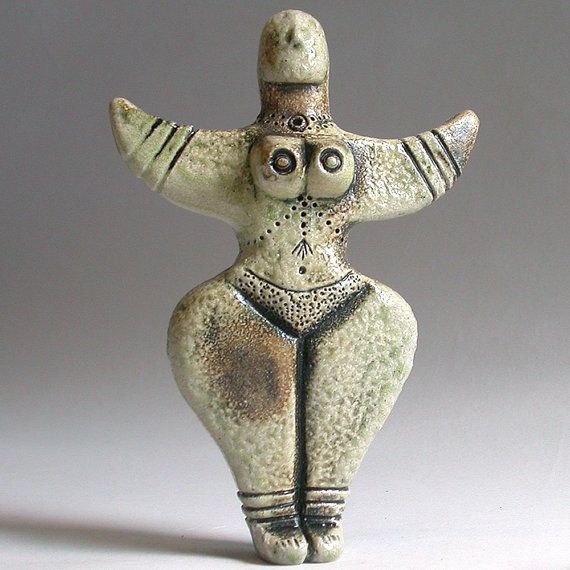
Archaeologists — the scientists who dig up the past — found her when they carefully brushed away the dirt at Tepe Sarab. She is small enough to hold in your hand, made of plain clay, shaped entirely by somebody's fingers. No machines. No tools with motors. Just hands.
Scientists call her the Venus of Sarab. "Venus" is the nickname archaeologists give to very old figures of women found all over the world. She isn't a queen or a goddess we know the name of — nobody wrote her name down, because writing hadn't been invented yet! But people think she may have been a good-luck figure, a symbol of families, new babies, and healthy crops. Something precious.
Today she rests safely in the National Museum of Iran, in Tehran, where you can go and look at her through the glass. Eight thousand years old, and still here.
Older than the famous statues
Here's the part that surprises almost everyone. When you hear "ancient statue," you probably think of Greece — those beautiful white marble figures. Those are amazing, and they're about two thousand years old.
The Venus of Sarab is four times older than that.
She was already ancient when the Greek sculptors were born. She was already ancient when Persepolis was built. Iran's story doesn't start with kings and empires — it starts in little villages like Sarab, with ordinary people making ordinary, wonderful things.
What else did the people of Sarab leave behind?
Diggers at Tepe Sarab found more than one figurine. They found:
- Little clay animals — goats, sheep, and other creatures the villagers lived with every day
- Simple pottery decorated with painted patterns
- Tools made of stone and bone
- The bones of the animals they raised, and the seeds of the plants they grew
Put it all together and you can almost see the village: goats wandering around, someone grinding grain, smoke from a cooking fire, and a child with muddy hands making a clay goat that would still exist eight thousand years later.
Why it matters
Big buildings and gold crowns are exciting, but the Venus of Sarab teaches us something even better: people have always been creative. Long before anyone could read or write, humans wanted to make things — to shape, to decorate, to imagine.
So the next time you sit down with clay, or play dough, or wet sand at the beach, remember: you are doing the same thing a child in Sarab did eight thousand years ago. You're part of a very, very long story.
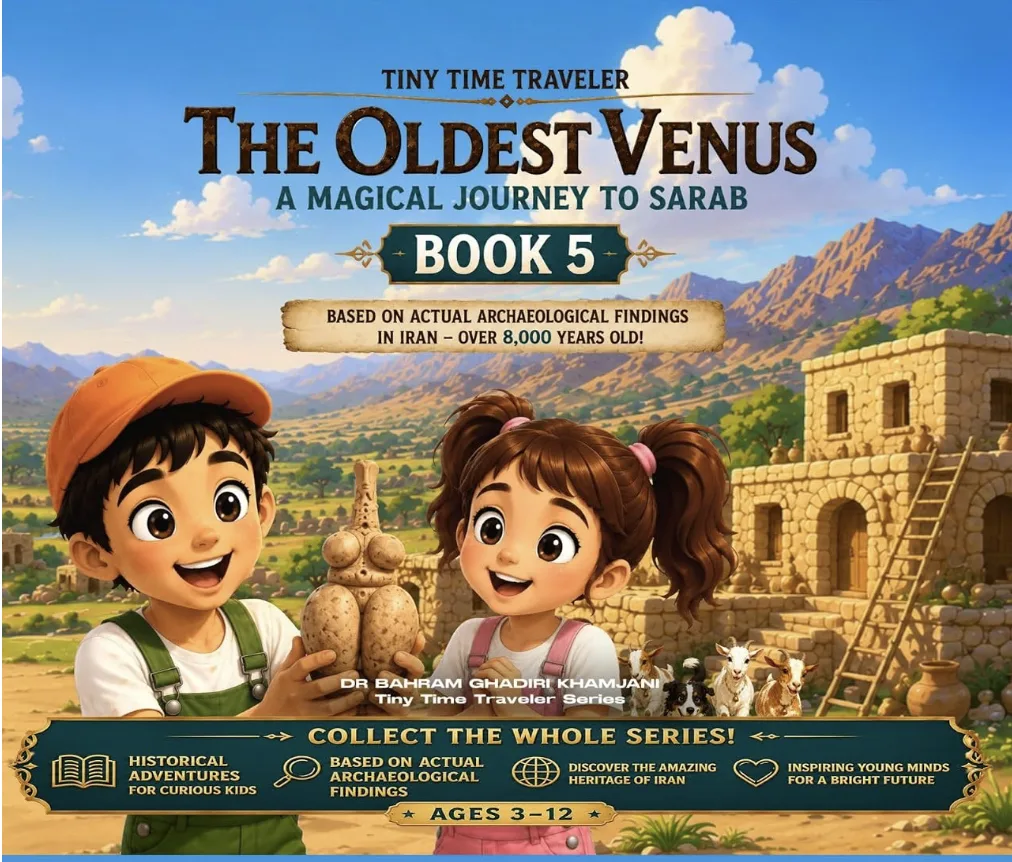
Want to travel back to Sarab yourself and make your own Venus? Fly there with Aryan, Ariana, and the magical Homa bird in The Oldest Venus: A Magical Journey to Sarab — Book 5 of the Tiny Time Traveler series.